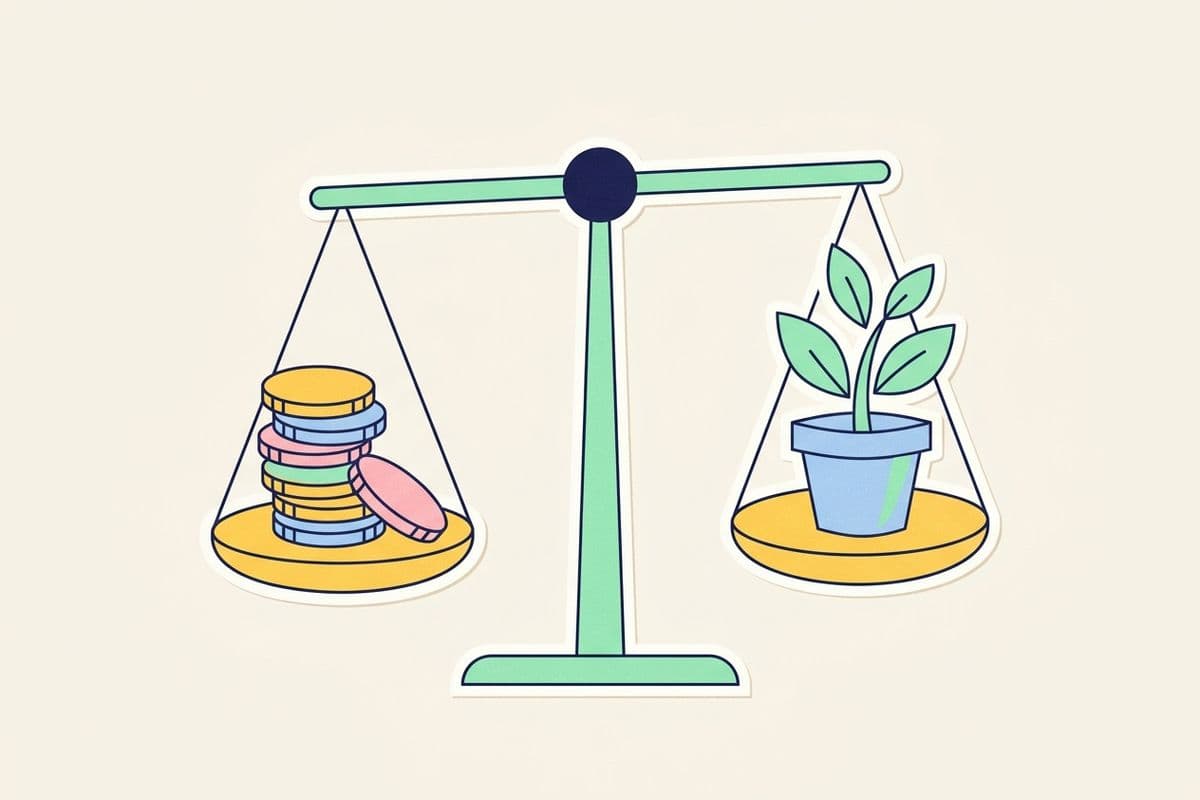
For startups and small businesses, an agency or a team package usually delivers more expertise per euro than a single in-house hire. According to Glassdoor (2026), a marketing manager in Europe earns €48K to €77K a year in base salary, and fully loaded with benefits, tools and training that is roughly €63K to €113K. For comparison, our marketing team package costs €3,500, €4,000 or €4,750 a month depending on ad budget (€42K to €57K a year, plus a one-off €500 setup), and covers paid ads, social media and AI visibility. In-house makes sense once marketing becomes a daily, full-time job across several channels. Often the best answer is both: your team, with ours working alongside.
Your marketing needs to get serious. Revenue is growing, but it could grow faster with real marketing muscle behind it. So you're weighing the options: hire someone in-house, or bring on an agency?
We're an agency, so you might expect us to pitch ourselves here. Instead, let's break down when each option actually makes sense, including the scenarios where you shouldn't hire us.
The real cost of an in-house marketer
Let's do the math most founders skip. According to Glassdoor's 2026 salary data, a mid-level marketing manager in Europe costs roughly:
- Base salary: €48,000 to €77,000 (varies by country, with Germany and the Netherlands on the higher end and Southern Europe lower)
- Benefits, taxes, insurance: typically 20 to 30% on top depending on country
- Tools and subscriptions: €3,000 to €8,000 a year (ad platforms, analytics, CRM, design tools)
- Training and conferences: €2,000 to €5,000 a year
- Management time (yours): hard to quantify, but real
Fully loaded, you're looking at roughly €63,000 to €113,000 per year for one person. That person will be good at one or two things and okay at the rest. They can't be an expert in paid ads and content and AI search and strategy. Nobody is.
The generalist trap
Startups usually hire a "marketing generalist" as their first marketing role. This person ends up doing a bit of everything: social media posts, some ad campaigns, email newsletters, updating the website. They're spread across six channels and crushing none of them. It's not their fault. It's a structural problem.
What an agency costs: our prices, in public
Agency pricing varies wildly, and many agencies hide it. So instead of quoting industry ranges, here is exactly what we charge, in euro and without VAT:
- Paid ads: €750, €1,250 or €2,000 a month by ad budget (under €5K, €5K to €20K, over €20K), plus a one-off €500 setup. The ad budget itself goes straight to Google or Meta.
- AI visibility: €1,500 a month.
- Social media: €1,000 a month.
- Marketing team: those three services together, plus a monthly call with our experts on strategy, for €3,500, €4,000 or €4,750 a month by ad budget, plus the one-off €500 paid ads setup.
- One-off services: marketing audit €1,500, marketing strategy €3,000, competitor analysis €500.
Monthly services start with a 3-month minimum, then run month to month. At the middle tier, the marketing team package is €4,000 a month, or €48,000 a year. That is less than the fully loaded cost of one in-house hire, for three services and our own AI tools instead of one generalist. Someone who runs ads all day will run better campaigns than someone who touches ads for five hours a week between writing posts and updating the website. (Not sure what a reasonable ad budget looks like? See our guide on how much startups should spend on Google Ads.)
When an agency is the better choice
An agency or team package makes more sense when:
- You can't yet afford specialist hires for each channel
- You need results across several channels at once (paid ads, social media, AI visibility)
- You want senior expertise without paying senior salaries
- You need to move fast: a team with systems and tools already built starts quicker than a hire who has to build them
- Your marketing needs fluctuate (seasonal business, launch cycles, funding rounds)
When hiring in-house is the better choice
An in-house marketer wins when:
- You need someone embedded in your product and talking to customers daily
- Your business can support specialist roles (a paid ads person AND a content person AND a strategist)
- Brand voice and company culture integration are critical to your marketing
- You have enough volume on a single channel to justify a full-time person managing it
- Marketing has become a daily, full-time job across enough channels to build a proper team
The hybrid model: your team, just a little bigger
Here's the setup that tends to work best: hire one strong marketing person in-house to own direction, brand and coordination. Then have us work alongside them on specialist execution: the paid ads, the social content, the AI visibility work.
Your in-house person knows the product deeply and sets direction. Our experts bring specialist skills and extra bandwidth, and our own tools do the heavy lifting. You get the best of both without the overhead of a full marketing department.
The question isn't agency or in-house. It's what combination gives you the most marketing horsepower per euro at your current stage.
Red flags when evaluating agencies
Since we're being honest, here's what should make you walk away from an agency:
- They won't tell you who'll actually work on your account (junior account manager incoming)
- They lock you into long contracts before proving anything
- They can't explain what you'll see while the work is happening
- They pitch "awareness" and "brand building" when you need leads and revenue
- Their reporting is a PDF that arrives monthly and nothing in between
- They won't put their prices on their website
Is AI recommending you or your competitor?
We ask ChatGPT, Claude, Gemini and Perplexity the questions your buyers would ask and show you who they name. Your result is ready in about two minutes.
The bottom line
If you're a startup or small business without a marketing team, an agency or team package probably gives you more marketing firepower per euro than a single in-house hire. The best ones don't just bring expertise, they bring their own AI tools that a single in-house hire could never build alone. Once marketing becomes a full-time job across several channels, start building the in-house team and use us for specialist overflow.
Whatever you choose, the worst option is doing nothing while you deliberate. Pick a path, set a 90-day evaluation window, and measure ruthlessly.